How the Rust Item Store Works: Weekly Skins and Limited Runs
How Rust's weekly limited store, the permanent store and the post-purchase hold fit together, with real prices from last week's set as of October 14, 2026.
Almost every tradable Rust skin started life in one place: Facepunch's item store. The store decides what enters the economy, when it enters and, just as importantly, when it stops. If you understand the store's rhythm, most of the Rust skin market starts to make sense.
Two stores under one menu
When you open the item store from Rust's main menu or from the game's Steam page, you are looking at two different things.
The limited (weekly) store
This is the part traders care about. Each week Facepunch puts a small set of skins on sale for a fixed price. Most are community designs picked from the Rust Workshop, and the creator gets a share of the revenue when a skin is sold in the store. The set rotates on Thursdays and stays for about a week before it is replaced.
As of October 14, 2026, the US Steam storefront lists 12 limited items, priced from $1.49 (Apotheosis of War Wood Gloves, Plague Doctor Small Backpack, The Fallen Chair) to $2.99 (Frostwrath SKS, Nuke Bunker Ladder Hatch). Most of the rest sit at $2.49. That spread is typical of recent weeks: cheap enough to impulse-buy, and the same for everyone while the window is open.
Facepunch does not publish an exact rotation time, and tracking sites disagree on the hour. They put the next change on Thursday, October 15, but if you want a specific skin at store price, buy it before Thursday afternoon UTC rather than cutting it close.
The permanent (general) store
In November 2021 Facepunch added a permanent store for premium items that are always on sale, starting with the Nomad hazmat skin. Facepunch was explicit at launch: items from the permanent store cannot be resold on the Steam marketplace or traded, and "hold no resale monetary value." Building skins, decor packs and premium hazmat skins sit on this side.
This split matters. A skin from the limited store can become a tradable asset. A permanent store item is something you buy to use.
What happens to a skin after its week
Once a limited skin leaves the store, Facepunch stops selling it. From then on, the only way to get one is from another player, on the Steam Community Market or a third-party marketplace. The number of copies that exist is close to settled on the day the window shuts.
There is also a delay before new purchases can move. Steam's own support pages say items bought in-game or on the Community Market are not tradable or marketable until the date shown on the item in your inventory. For Rust store purchases, that date is widely reported as seven days after purchase. The market data is consistent with it: last week's *S* Door went on sale on October 1, 2026, and its first Steam Market sales show up on October 8.
The result is a predictable pattern. For the first week, nobody can sell, so there is no market price. Then a week's worth of buyers can list at once, just as the next set lands in the store.
Last week's set, one week later
Here is how a few skins from the October 1 set looked on October 14, 2026. Store prices are as recorded by community store trackers. Market prices are the lowest Steam listing on rustskins.gg.
| Skin | Store price | Lowest Steam listing |
|---|---|---|
| *S* Door | $3.49 | $139.96 |
| Wrought Iron Chair | $1.49 | $2.81 |
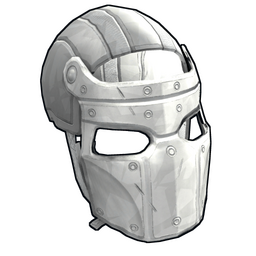
| Modern Military Wood Helmet | $1.99 | $2.00 |
| MetalCore Thompson | $2.99 | $2.64 |
The *S* Door is the outlier. Its daily average on Steam was $176.49 on October 8 and peaked at $236.22 the next day, before easing to $159.39 on October 13. Its estimated supply is only 1,088 copies, which is very small for a store skin. The MetalCore Thompson, by contrast, has an estimated 10,740 copies and already trades below its store price.
That table is a fair picture of the weekly store: one surprise, a couple of skins that hold roughly flat, and some that drop below what buyers paid. Treat the store as a place to buy skins you want to use, not as a guaranteed flip.
A short note on how the system evolved
The weekly rhythm is not how it always worked. Rust was the first game to use Steam's developer-run Item Stores when they launched in November 2015. In January 2017, Facepunch described a different model in Devblog 143: skins stayed for seven weekly cycles, starting cheap and rising in price each cycle until they left. The reasoning, from the week before, was that people "want their bought skins to be worth trading and selling after we stop selling them."
The current one-week window is shorter and sharper. Supply is set by a single week of demand, which is why first-week buying interest has such a large effect on later prices.
Using the store well
A few habits help whether you are decorating a base or watching prices.
- Decide before Thursday. Once the set rotates, the store price is gone for good. If you only want one copy to use, the store is usually the cheapest it will ever be, unless the skin later falls below store price.
- Expect a week of silence, then a flood. The first days of market trading after the hold ends are often the most volatile. The *S* Door's daily average price swung by more than $70 in its first five days of trading.
- Know which side you are buying from. Limited store skins trade. Permanent store items and DLC do not, so they will not hold resale value.
- Price older skins against the market. If you missed a skin, compare listings across marketplaces before paying Steam's price. The price comparison tool shows Steam and third-party prices side by side.
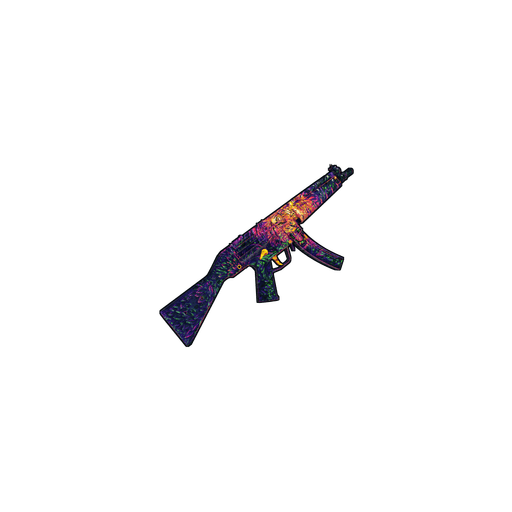
The cover skin here, the Heat Seeker Mp5, shows the slower version of the same story. Community trackers record it as a $2.99 store skin from May 2025. As of October 14, 2026 it lists at $5.03 on Steam, with an estimated 71,281 copies in circulation. That's a modest rise for a popular weapon skin, nothing dramatic.
Where to watch the effect
The days after a rotation are when store skins enter the market. The market cap and trending page shows 7-day movers, so you can see which recent skins are climbing and which are sliding. Use the full item list to look up any skin by name. Each item page shows current listings from Steam and third-party marketplaces with their listing counts. That count tells you whether a price is backed by real supply or by a handful of listings.