Rust Skins as an Investment: Patterns, Costs and Real Risks
What Rust's market history shows about store skins that rose and fell, what fees and thin listings cost you, and the risks to weigh before buying skins to hold.
Rust skins have a reputation as a place where a $2 purchase can become $80. A few did. This post looks at what the data supports, what it leaves out, and what holding skins actually costs. It isn't financial advice, and nothing here predicts future prices. Cosmetic items can lose most of their value, and some have.
The pattern people point to
The argument for holding Rust skins rests on one mechanic. A limited store skin is sold for about a week and then never again. Supply is roughly fixed from that day on, so if demand grows, price has to rise. Facepunch designed for that outcome. In a January 2017 devblog, it noted that "people want their bought skins to be worth trading and selling after we stop selling them."
The famous examples are real. Community store trackers record these as cheap store skins. Current prices are the lowest Steam listing on rustskins.gg as of October 14, 2026.
| Skin | Store year | Store price | Lowest Steam listing |
|---|---|---|---|
| Forest Raiders Roadsign Pants | 2021 | $2.49 | $86.84 |
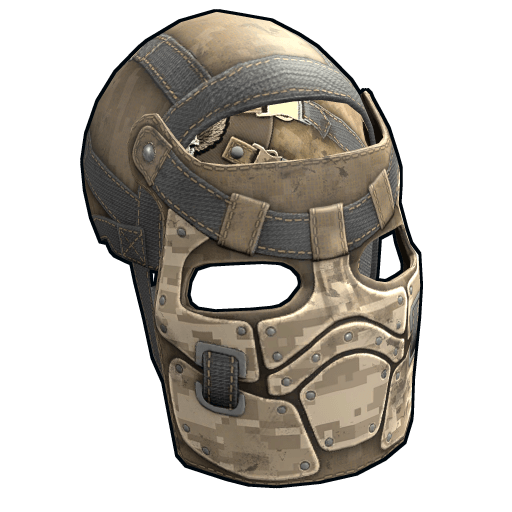
| Desert Raiders Facemask | 2021 | $2.49 | $71.65 |
| Neon Boom Storage | 2021 | $2.99 | $35.92 |
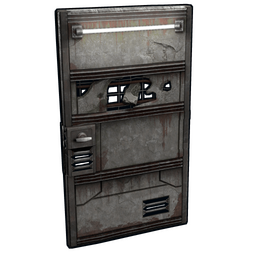
| Brutalist Sheet Metal Door | 2023 | $3.99 | $18.97 |
The market as a whole has grown too. On rustskins.gg's daily market cap chart, the total was about $121.6 million on October 13, 2025 and $183.1 million on October 13, 2026.
The part that gets left out
Lists like the one above suffer from survivorship bias. They show the skins that rose, picked after the fact from thousands of releases.
The Tempered Thompson is the counterexample. Trackers record it as a $4.99 store skin in 2021. As of October 14, 2026, it lists at $2.08, with an estimated 92,146 copies in circulation. From last week's store set, the MetalCore Thompson ($2.99 in the store) is already at $2.64. Many store skins end up near or below what buyers paid.
The market also falls. The same daily chart peaked at about $207.0 million on August 15, 2026, so the October 13 figure is roughly 12% below that peak. Over the 30 days to October 14, 2026, the Forest Raiders Roadsign Pants, the top item by market cap, were down 13.54%.
What holding actually costs
Fees
Selling on the Steam Community Market costs about 15%: a 5% Steam fee plus a 10% game fee, both calculated on the seller's proceeds. To get back $2.49, you have to sell at $2.85. Every skin has to rise about 15% before a Steam sale breaks even, and the proceeds stay in your Steam Wallet. Third-party marketplaces pay out in other ways but charge their own fees and carry their own risks.
Spreads
The price you can buy at and the price you can sell at are different numbers. For the Desert Raiders Facemask on October 14, 2026, the lowest Steam listing was $71.65, the best Steam buy order was $69.27, and the cheapest third-party listing was $56.04. If you bought at the Steam ask, the market value of what you hold is arguably closer to the lower figures.
Liquidity
Expensive, scarce skins can be slow to sell. On the same date, the Big Grin had only 14 Steam listings, with a $1,100.00 ask against a best buy order of $1,000.01. The Tempered Mp5 had 5 listings at a $647.25 ask, while the best buy order was $468.39. A thin market can make a portfolio look more valuable than you could sell it for.
How short-term numbers mislead
Trending lists rank percentage changes, and those can come from very little trading.
The Guerilla M249 topped the 7-day gainers on October 14, 2026 at +417%. Its $6.62 Steam price rested on 5 listings, though, while the best Steam buy order was $1.33 and the cheapest third-party listing was $1.06. That isn't a skin worth $6.62. It's a thin order book with a high ask at the top.
The reverse happens too. The No Mercy Wood Gloves showed a 7-day drop of more than 90%, but that came from one sale at $25.57 on October 6. Every day since October 8 has averaged under $2. Before reading anything into a percentage, check the listing count and the sales behind it.
The risks, plainly
- Facepunch controls supply and rules. It has changed how long skins stay in the store, added a permanent store whose items can't be traded, and in March 2025 tied access to Premium servers to holding at least $15 of inventory value. In June 2026 it said it plans a new monthly opt-in system for "additional skins/perks" under the Rust Premium name, with details still to come. Any of these can shift demand, in either direction.
- Valve controls the platform. Trade holds, market restrictions and fees are set by Steam and can change.
- Demand depends on the game. Skins are only worth something while people play Rust and care how their base looks.
- Supply figures are estimates. Market cap and supply numbers come from inventory scans, not official counts.
- Rust trades can't be reversed. Steam's Trade Protection, which lets victims undo recent trades, currently applies only to Counter-Strike 2. A stolen Rust inventory usually stays stolen.
- Taxes and rules vary by country. Profits from selling items may be taxable where you live.
If you do it anyway
A few habits keep the downside contained.
- Only put in money you would be fine spending on cosmetics outright.
- Prefer skins you would use, so a flat price still leaves you with something you like.
- Favor items with deep order books on both sides over thin, high-priced listings.
- Compare prices across marketplaces before buying. The price comparison tool shows the spread in one place.
- Track how your holdings and the broader market move on the market cap and trending page, and judge performance against the price you could actually sell at, not the highest ask.