Steam Market vs Third-Party Prices: Why the Gap Exists
Why CS2 skins cost more on the Steam Community Market than on cash marketplaces, how fees and wallet-only funds create the gap, and how to use it.

Look up any popular CS2 skin and you'll see two very different prices: one on the Steam Community Market and a much lower one on third-party marketplaces. New traders often read the gap as an easy profit. It isn't. It's the price of a currency difference, and once you see it that way, you can use it instead of being fooled by it.
How big the gap is today
As of October 14, 2026, cs2skins.gg showed the following cheapest listings, comparing the cheapest offer across all tracked cash stores with the cheapest Steam listing:
| Item | Cheapest elsewhere | Cheapest on Steam | Steam premium |
|---|---|---|---|
| AWP Asiimov (FT) | $92.63 | $167.46 | +81% |
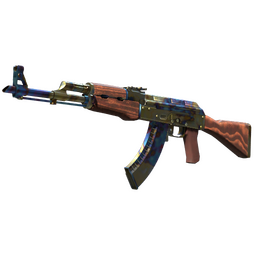
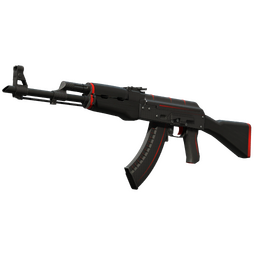
| AK-47 Redline (FT) | $24.05 | $39.35 | +64% |
| USP-S Kill Confirmed (FT) | $56.30 | $95.73 | +70% |
| Operation Breakout Weapon Case | $6.60 | $11.96 | +81% |
| Kilowatt Case | $0.08 | $0.23 | +188% |
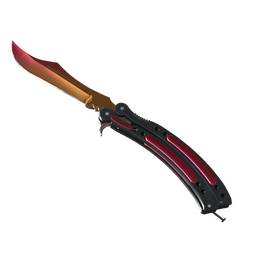
The gap is large on everything, and largest on the cheapest items. For the mid-priced skins in the table, Steam asked roughly 1.6 to 1.8 times the cash price on this date. For the Kilowatt Case, it asked almost three times as much. At the top end, the comparison stops working: a vanilla ★ Butterfly Knife started at $1,067.99 elsewhere but had a single Steam listing at $1,806.40, and the cheapest Factory New ★ Butterfly Knife | Fade, at $1,823.13 elsewhere, had no Steam listings at all.
Reason 1: Steam money can't leave Steam
Valve's Market FAQ is explicit: funds from Community Market sales can't be withdrawn or transferred. Every dollar in a Steam Wallet can only buy games, items and other Steam purchases. That makes wallet funds worth less than cash to almost everyone, because cash can do everything a wallet can and more.
So a Steam price and a cash price are quoted in two different currencies. A skin "costing" $167 on Steam and $93 elsewhere is like a hotel priced in loyalty points versus euros. Neither number is wrong. They just measure different things.
Reason 2: the 15% fee
Every Steam Market sale carries a 5% Steam transaction fee and a 10% Counter-Strike 2 fee, both added on top of what the seller receives. A buyer paying $167.46 for that Asiimov leaves the seller about $145.60 in wallet funds. Each fee also has a one-cent minimum, so the cheapest possible sale is three cents. On a case worth a few cents, fees take a far bigger share, which helps explain why cheap items show the widest gaps.
Third-party stores charge less to sell, typically 2% to 8% at the major ones, and pay out in money. Lower friction pushes their prices down toward what a cash buyer will really pay.
Reason 3: Steam's caps push expensive items elsewhere
Steam caps wallet balances at $2,000 and won't let you list an item if the sale would push your balance over that limit. It also caps the price of a single listing. Together, those limits mean high-end knives, gloves and rare stickers trade almost entirely on third-party stores. That's why the Butterfly Fade above had no Steam listings: its natural price sits beyond what Steam's system comfortably handles.
Reason 4: convenience and safety
Steam is the only Valve-run market, and buying there carries no counterparty risk: no deposits, no withdrawals, no scam exposure from the platform itself. Items bought there arrive instantly and can be used right away. Cases bought on Steam can even be opened immediately, while cases received through a trade are Trade Protected and can't be opened for seven days. Some buyers happily pay a premium for that.
Reason 5: who has wallet money
Many players hold wallet funds from selling drops, cases and cheap skins. That money has nowhere else to go, so it keeps bidding for items on Steam. It's a steady source of demand that cash markets don't share, and it props up Steam prices for popular items.
Using the gap
Value your inventory in cash terms
Inventory trackers that use Steam prices overstate what your skins would fetch in money. If you're thinking about cashing out, look at prices across cash stores, not at Steam's lowest listing. The Steam market profile and the marketplace comparison page show how each store prices against Steam.
Selling for games versus selling for cash
If you want Steam games anyway, the Steam Market is a convenient place to sell, and its higher prices partly offset the fee. If you want money, sell on a cash marketplace or to an instant-sell service such as cs2sell.com, and compare against cash prices only.
The reverse trip
Some players buy skins with cash on third-party stores and sell them on Steam to fund game purchases at a discount. The maths works on paper, but the real numbers are thinner than they look: the 15% fee comes off first, Steam's purchase cooldown and trade protection keep the item locked for about a week, and the price can move in that time.
Why the gap isn't free money
- The lowest Steam listing isn't a sale price. Selling quickly usually means undercutting it.
- You can't move wallet money back out. Any "profit" on Steam is locked in Steam.
- Prices move during the lock. A week of exposure on a volatile skin can wipe out the margin.
- Thin items have deceptive Steam prices. One listing at a high price says little about what anyone will pay.
- Steam buy orders are wallet money too. A generous Steam bid is still a bid in a currency you can't withdraw, so compare it with cash bids, not with cash listings.
Treat the Steam price and the cash price as two separate markets, and decide which currency you actually want before you trade.