Tradable vs Non-Tradable Rust Items and How Trade Holds Work
Which Rust items can be traded or sold, which are locked to your account, and how Steam's item dates, trade holds and market restrictions apply to each.

Open your Rust inventory on Steam and every item falls into one of three groups. Some you can trade or sell today. Some you can trade later, after a date printed on the item. Some you'll never be able to trade. On top of that, your account itself can be restricted for a while. Mixing these up is how people buy something expecting to resell it, or plan a trade that can't happen yet. Here is how each layer works.
Items you can trade and sell
The tradable core of the Rust economy is skins from Facepunch's limited weekly store, plus anything bought from other players.
- Limited store skins. Weekly community skins can be traded and sold on the Steam Market once their hold ends. The Blackout Hoodie is a typical example: a 2020 limited skin with an estimated 33,403 copies and a lowest Steam listing of $23.94 as of October 14, 2026.
- Market and trade purchases. Items bought on the Community Market or received in trades stay tradable, subject to the date shown on the item.
- Older items. Skins from earlier years, like the 2016 and 2017 classics, trade like any other.
To check a specific item, open it in your Steam inventory. Steam shows whether it's tradable and marketable, or the date when it will be.
Items that are never tradable
Several kinds of Rust cosmetics are locked to the account that got them.
Permanent store items
When Facepunch launched the permanent store in November 2021, it said these items "will not be able to resold on the Steam marketplace" and can't be traded on Steam. That covers premium items like building skins, decor packs and premium hazmat suits.
DLC packs
Packs like Instruments, Sunburn and Voice Props are bought as Steam DLC, not as tradable inventory items. Facepunch's Premium servers rules also leave standalone DLC out of the inventory-value check.
Twitch and Kick drops
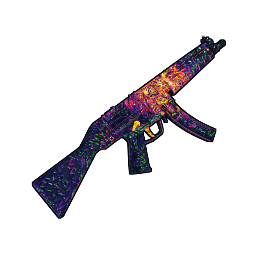
Facepunch's wiki says drop skins "are account bound and can not be traded or sold." The Twitch Rivals AR shows what that looks like in data: about 10,941 copies in player inventories, and no listings anywhere as of October 14, 2026.
Special event and gift items
Some charity and event items are sold or given as non-tradable on purpose. When four Charitable Rust 2021 skins went on sale, the event's organizers said they "cannot be sold or traded." The Frog Boots that Facepunch gave Early Access supporters in February 2018 show about 76,032 copies and no market listings as of October 14, 2026.
Across the whole catalog, the gap is large. Rustskins.gg tracks 6,581 Rust items, but only 5,537 have a Steam price. Items like these, which can't be listed at all, make up much of the difference. The Charitable Rust 2021 box and doors, for example, each have more than 7,000 copies and no listings on that date.
Item-level holds: the date on the item
Some items are tradable, just not yet. Steam's support pages say that "items purchased in-game or on the Community Market will not be tradable or marketable until after the date indicated on the item" in your inventory.
For Rust's weekly store, that date is widely reported as seven days after purchase, and the market data fits. The *S* Door went on sale in the store on October 1, 2026, and its first Steam Market sales appeared on October 8. The hold only affects moving the item. You can apply the skin in game right away.
Account-level restrictions
Separately from item dates, Steam can restrict the whole account. These come from Steam's "Trading and Market Restrictions" support page.
| Situation | Effect |
|---|---|
| No mobile authenticator | Trades can be held for up to 15 days |
| Authenticator added recently | Trades created in the first 7 days can still be held up to 15 days |
| Steam Guard enabled for less than 15 days | No trading or Community Market |
| Logging in on a new device | No trading or market from that device for 7 days, unless the authenticator has been active for 7+ days |
| Password reset | No trading or market for 5 days, or 30 days if the account was inactive for over two months |
| Authenticator removed | No trading or market for 15 days |
| Cancelled an accepted trade during its hold | No trading for 7 days |
| No purchase between 7 days and a year old | No Community Market access |
Steam Support says it can't lift these restrictions, whatever the circumstances.
No reversals for Rust
Steam's Trade Protection lets a victim reverse recent trades within seven days, but Steam says it currently applies only to Counter-Strike 2. Rust trades are final once they complete. That makes the 15-day hold for accounts without an authenticator one of the few safety nets left. It's slow, but it gives you time to cancel a trade someone else started.
Facepunch's own rules
Facepunch adds a layer on top of Steam's. In its Premium servers announcement, it said that "all trades of Rust skins are logged" and that accounts caught abusing Premium servers "or the market" will be banned. Tradability doesn't mean anything goes.
Planning around the rules
- Turn on the mobile authenticator early. It removes trade holds once it has been active for seven days, so set it up before you need it.
- Buy store skins with the hold in mind. If you want to sell a store skin, you won't be able to for about a week, and many other buyers will be listing at the same moment.
- Don't count locked items as value. Permanent store items, DLC and drops have real use in game but no resale value.
- Read the item before you buy elsewhere. Third-party marketplaces only list tradable items, but if someone offers a private deal, check the item's tradable line and date first.
- Know the market's own rules. The Steam Market profile summarizes fees and features, and the marketplace directory covers third-party alternatives and how they handle trades.