Why Some Rust Skins Rise After They Leave the Item Store
Fixed supply, first-week selling and everyday base-item demand explain why some Rust store skins climb after their week while most stay near store price.
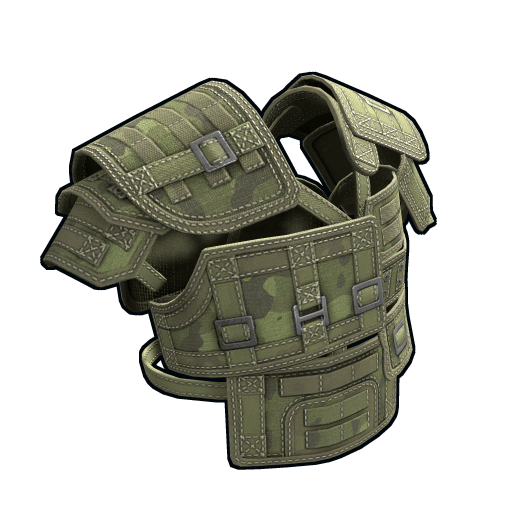
Two store skins, two outcomes. Community store trackers record the Forest Raiders Roadsign Vest as a $2.49 skin from August 2021. As of October 14, 2026, its lowest Steam listing is $60.72. The Tempered Thompson is recorded at $4.99 from February 2021. On the same date it lists at $2.08.
Both had one week in the store, and both have been on the market for years. One is worth about 24 times its store price, the other less than half. The gap comes down to a few mechanics that apply to every limited Rust skin.
Supply stops at the store exit
A limited skin is only sold by Facepunch during its store window. Community trackers flag some older skins as possible crate drops, so supply isn't always frozen completely. Still, the big wave of new copies ends with the store week. After that, almost every buyer has to buy from someone who already owns one.
This was a deliberate design choice. When Facepunch reworked store pricing in January 2017, it noted in Devblog 142 that "people want their bought skins to be worth trading and selling after we stop selling them." Facepunch's older Workshop FAQ makes a related point: "All skins have limited runs," and this is "particularly true with bright skins that we don't want to see everywhere."
A fixed supply doesn't guarantee a rise. It means price is set entirely by how many people want the skin compared with how many copies exist. The rest of this post is about those two numbers.
Store-week demand sets the size of the float
The store week decides how big the supply will be, and everyone buying that week is part of it. Some buy to use the skin, some buy extras to sell. Since store purchases are held from trading for about a week, sellers can't move their copies until the hold lifts. Then they can all list at once, usually as the next set arrives.
Last week's set shows how differently that can land. Store prices are from community trackers. Market prices and supply estimates are from rustskins.gg as of October 14, 2026.
| Skin (Oct 1 store set) | Store price | Lowest Steam listing | Estimated supply |
|---|---|---|---|
| *S* Door | $3.49 | $139.96 | 1,088 |
| Wrought Iron Chair | $1.49 | $2.81 | 7,632 |
| Modern Military Wood Jacket | $1.99 | $2.37 | 11,835 |
| No Mercy Wood Gloves | $1.49 | $1.87 | 21,371 |
| MetalCore Thompson | $2.99 | $2.64 | 10,740 |
The *S* Door is the clearest case of a tiny float meeting real demand. With an estimated 1,088 copies, it has 26 Steam listings against 414 buy orders, the best of them at $126.52. The No Mercy Wood Gloves sold more than 20,000 copies, and that much supply leaves little room to climb. The MetalCore Thompson is already below its store price a week in.
What the long-term risers share
Look at the skins that have climbed most over the years and a few traits keep showing up.
They skin something players use every wipe
Rust's market cap is concentrated in items that get crafted and placed all the time. On rustskins.gg's data as of October 14, 2026, the five item types with the largest combined market cap are Metal Facemask, Large Wood Box, Road Sign Kilt, Hoodie and Pants. Assault Rifle comes next. Demand for those skins renews every wipe, because every new base needs boxes and every fight needs armor.
They belong to a set
The Forest Raiders collection holds five of the top 12 spots by market cap, led by the Forest Raiders Roadsign Pants at number one. A full matching kit creates demand for every piece, and the scarcest piece tends to pull the others up.
They are old, or supply was tiny from the start
Ten of the 12 highest Steam prices as of October 14, 2026 belong to items released between 2015 and 2017. The other two came out in 2023 and 2024 with very small supplies. All 12 have estimated supplies between 67 and 1,283 copies. Back then, a skin might sell a few hundred or a few thousand copies. Today a single week can sell tens of thousands, so those early skins are scarce by comparison.
They stand out visually
Several of the priciest weapon skins, such as the Alien Red and Glory AK47, have glowing elements. That fits Facepunch's stated reluctance to let bright skins become common.
Why most skins don't rise
The Tempered Thompson shows the other side. With an estimated 92,146 copies, it is the most widely owned Thompson skin on rustskins.gg's supply data. That's not a flaw in the design. So many people bought it that anyone who wants one can find a seller. Its price has fallen even though the skin is still popular.
Fees widen the gap. Steam takes about 15% of every Community Market sale: a 5% Steam fee plus a 10% game fee on Rust items. Each part is calculated on the seller's proceeds. To get back $2.49 after fees, a seller has to list at $2.85. A skin has to rise about 15% just for a store buyer to break even on Steam, and that money stays in a Steam Wallet.
Reading the signs without fooling yourself
None of this predicts which skin will rise next. It does help separate a real rise from noise.
- Compare supply to the order book. Few listings, many buy orders and a small estimated supply mean a thin float with real demand. Thousands of listings mean the opposite.
- Ignore single-sale spikes. The No Mercy Wood Gloves show a 7-day drop of more than 90% on the trending page, but that comes from one $25.57 sale on October 6. Every day since October 8 has averaged under $2.
- Wait out the first weeks. Prices in the days after the hold lifts swing hard. The *S* Door's daily average went from $176.49 to $236.22 and back to $159.39 in under a week.
- Remember Facepunch sets the rules. Store length, pricing and what counts as tradable have all changed before, and could change again.
To track how recent store skins settle, the 7-day movers on the market cap page are the quickest view. The price comparison tool shows whether a Steam price holds up against third-party listings.